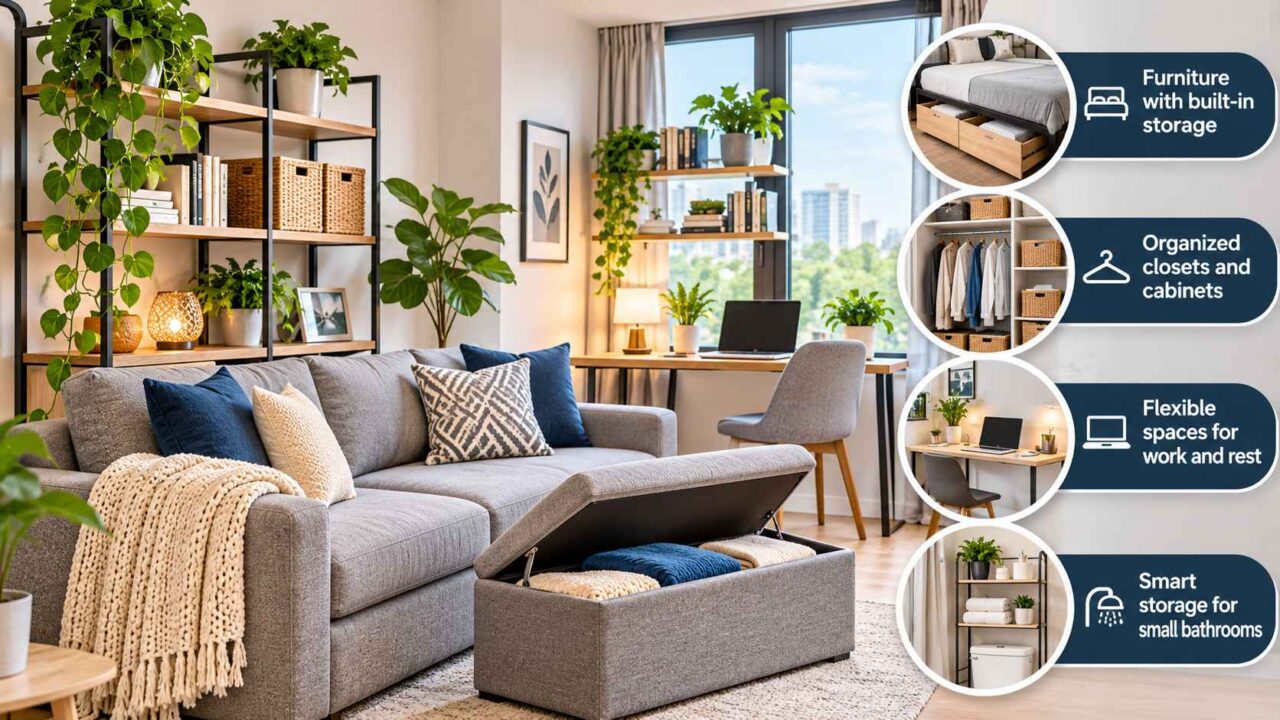
A small apartment can feel surprisingly spacious when everything has a purpose and a place. Sometimes, the difference between a cluttered living room and a comfortable one comes down to choosing the right furniture, organizing overlooked spaces, and making better use of existing storage.
For renters, the challenge is finding practical solutions without altering walls, replacing fixtures, or undertaking renovations.
Whether living in a studio apartment, sharing a home with a partner, or managing the belongings of a growing household, thoughtful organization can make everyday routines easier.
The goal is not to eliminate personal possessions or create an unrealistically minimalist home. It is to design a living space that balances storage, comfort, and individual style.
Choose Furniture That Provides Extra Storage
Furniture occupies valuable floor space, particularly in compact apartments. Choosing pieces that serve multiple purposes can help reduce the need for additional cabinets and shelving.
Make Everyday Furniture Work Harder
A storage ottoman, for example, can provide seating, serve as a footrest, and hold blankets or other household items.
Beds with built-in drawers may offer additional space for clothing or seasonal belongings.
Coffee tables with lower shelves can keep books, magazines, and small accessories organized.
Before purchasing storage furniture, measure the available space and consider how frequently the stored items will be needed.
A large storage unit may create more problems than it solves if it restricts movement around the room.
Make Better Use of Vertical Space
When floor space is limited, vertical storage can provide additional organization opportunities.
Tall, freestanding bookshelves may accommodate books, decorative objects, and storage baskets without occupying as much floor area as several smaller cabinets.
However, renters should consider stability, accessibility, and applicable building policies.
Use Existing Wall Space Carefully
Over-the-door organizers may provide convenient storage for lightweight accessories where suitable.
Freestanding shelving and adjustable storage units can also help organize belongings without requiring permanent modifications.
Avoid installing heavy wall-mounted fixtures without the necessary permission.
Where furniture requires anti-tip restraints for safety, renters should discuss suitable installation arrangements with their landlord or property manager.
Effective vertical storage should make belongings accessible without creating unnecessary hazards.
Organize Closets to Maximize Available Space
Closets often become crowded because clothing, footwear, and accessories are stored without a consistent system.
A practical first step is removing everything and reviewing what is actually used.
Group similar belongings together, such as everyday clothing, seasonal items, and accessories.
Divide Storage Into Functional Areas
Drawer organizers, shelf dividers, and storage baskets can help separate smaller items.
Matching hangers may also create a more orderly arrangement and make clothing easier to locate.
For seasonal belongings, consider using appropriate containers on existing shelves.
Frequently used items should remain accessible, while less-used belongings can occupy higher or less convenient storage areas.
The objective is to improve organization without purchasing unnecessary storage products.
Create a More Functional Kitchen
Kitchens can become crowded when cookware, dishes, pantry items, and cleaning supplies compete for limited cabinet space.
Fortunately, many organizational improvements can be made without changing the kitchen’s permanent fixtures.
Improve Cabinet Organization
Freestanding shelf risers can help separate dishes or pantry containers.
Drawer dividers make utensils easier to locate, while removable organizers can keep smaller supplies grouped together.
Store frequently used items near the areas where they are needed.
For example, everyday cooking utensils may be more convenient near food preparation surfaces than in a distant cabinet.
Keep countertops reasonably clear to preserve usable preparation space.
Renters should avoid attaching organizers with adhesives that could damage cabinet finishes.
Design an Entryway That Prevents Clutter
The entrance to an apartment often collects shoes, coats, bags, keys, and delivery packages.
Without a designated organization area, these belongings can quickly spread into nearby rooms.
A compact shoe rack, narrow console table, or small storage bench may help keep everyday essentials together.
Keep the Entrance Accessible
Choose furniture that does not obstruct doors or walking routes.
A decorative tray can provide a convenient place for keys and small accessories.
Freestanding coat storage may be useful when permanent hooks are not permitted.
An organized entryway can make arriving home and leaving for work more convenient while keeping clutter out of the main living area.
Make Small Bathrooms Easier to Use
Bathrooms often have limited storage despite containing numerous everyday essentials.
Toiletries, towels, cleaning products, and grooming accessories all require appropriate places.
Small countertop organizers can keep frequently used items accessible.
Drawer dividers and suitable freestanding shelves may provide additional organization without permanent alterations.
Prioritize Practicality and Moisture Resistance
Choose storage accessories appropriate for bathroom humidity.
Avoid placing items where they interfere with ventilation, fixtures, or safe movement.
Cleaning supplies should be stored securely, particularly in households with children or pets.
An organized bathroom should remain easy to clean and comfortable to use.
Use Multipurpose Furniture for Flexible Living
Apartments frequently need to accommodate several activities within the same space.
A living room may function as an entertainment area, occasional workspace, and place for guests.
Multipurpose furniture can support these changing needs.
For example, an extendable dining table may accommodate everyday meals while providing additional surface space when required.
Nesting tables can be rearranged for visitors and stored compactly afterward.
A sofa bed may provide occasional guest accommodation where room dimensions allow.
The most useful furniture serves genuine household needs rather than adding features that rarely get used.
Create Separate Areas for Work and Relaxation
Remote and hybrid work arrangements can make apartment organization more challenging.
Not every renter has a separate room available for a home office.
However, a functional workspace may fit within an existing living area.
Establish a Dedicated Work Zone
A compact desk, suitable chair, and portable task lamp can create a practical work area.
Use cable organizers and small storage containers to keep equipment tidy.
Where possible, position the workspace away from busy household circulation routes.
A folding desk or portable work surface may provide flexibility when space is limited.
At the end of the workday, putting away equipment can help return the room to its usual purpose.
Reduce Clutter Without Sacrificing Comfort
Decluttering does not require removing everything decorative or sentimental.
Books, photographs, artwork, and personal collections can make an apartment feel welcoming.
The challenge is displaying these belongings without overwhelming available surfaces.
Consider rotating decorative items rather than displaying everything simultaneously.
Use storage baskets to organize smaller belongings while maintaining a consistent visual appearance.
Before buying additional furniture, review whether existing storage can be reorganized more effectively.
A comfortable apartment should reflect its occupants rather than resemble an empty showroom.
Choose an Apartment Layout That Fits Your Household
Storage planning should begin before moving into a new rental home.
An apartment’s layout influences furniture placement, storage options, and everyday functionality.
For example, a studio renter may prioritize a clearly defined sleeping area and flexible furniture.
A household with several occupants may need additional closets or separation between bedrooms and shared spaces.
People exploring available rental apartment options can compare listings and consider which layouts are most compatible with their belongings and routines.
Similarly, renters researching Ottawa apartments for rent should examine individual floor plans and confirm storage features rather than assuming all properties offer identical arrangements.
Evaluate Storage During an Apartment Viewing
An apartment may look spacious when empty but feel different after furniture and personal belongings are added.
During a viewing, consider the following:
- Are closets and cabinets sufficient for household essentials?
- Will existing furniture fit without blocking movement?
- Is there suitable space for a desk or multipurpose furniture?
- Can seasonal belongings be stored conveniently?
- Are kitchen and bathroom storage areas practical?
- Are there restrictions on installing shelves or other organizers?
The Canada Mortgage and Housing Corporation provides resources for renting a home, including general guidance on evaluating rental properties and understanding rental arrangements.
Renters should also confirm which storage facilities, if any, are included with a particular apartment.
Making Better Use of the Space You Already Have
Comfortable apartment living is not determined entirely by square footage.
Thoughtful furniture choices, practical storage systems, and flexible room arrangements can help residents make better use of their available space.
For renters, the most effective solutions are often portable, affordable to manage, and suitable for the existing apartment without permanent changes.
An organized kitchen makes meal preparation easier. A functional entryway simplifies daily routines. Flexible furniture allows rooms to accommodate different activities.
By considering storage needs before choosing an apartment and adapting organization as household circumstances change, renters can create homes that feel comfortable, personal, and practical without requiring major renovations.